
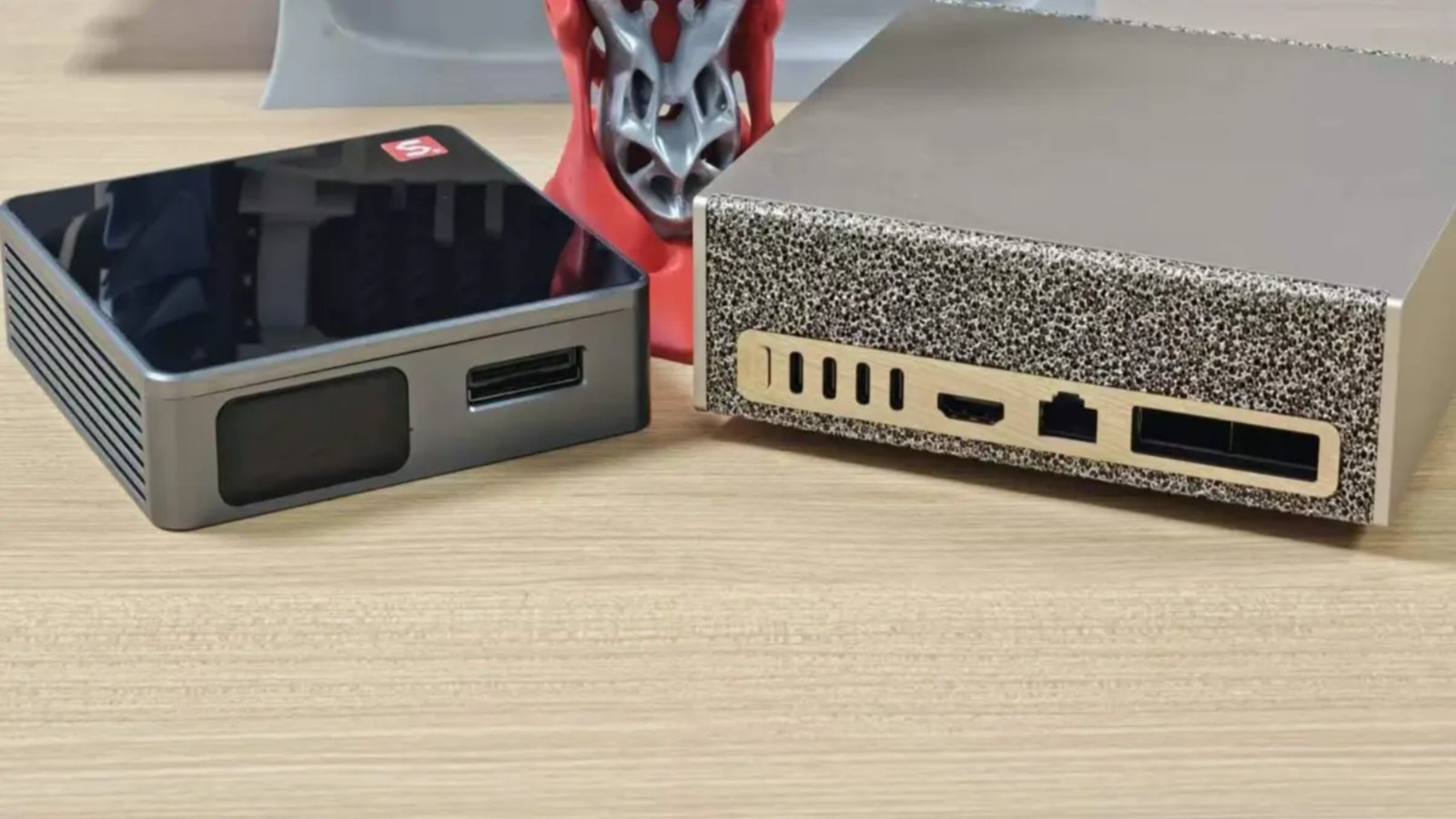
Sipeed, a Chinese electronics manufacturer, has made a bold claim that their upcoming MaixStation AI computer can outperform Nvidia’s DGX Spark in specific Qwen workloads. The MaixStation, powered by Axera’s AX8860P processor, features 16 Arm Cortex-A55 cores and delivers 256 TOPS of AI acceleration, all while consuming a mere 40W of power. This is a significant achievement, considering the DGX Spark’s advertised 1,000 TOPS using sparse FP4 calculations.
Let’s break down the specs. The AX8860P uses a 6nm manufacturing process, supports 256-bit LPDDR5X memory, and offers PCIe 5.0 connectivity. It also includes 64 video decoding channels and 16 encoding channels, supporting up to 128GB of memory. The MaixStation’s 128GB configuration is priced under $4,000, which is a fraction of the DGX Spark’s reported $6,949 price tag.
Sipeed’s claims are backed by benchmarks showing that their system slightly exceeds the DGX Spark’s performance in Qwen workloads. They attribute this to more efficient use of processing resources during prefill operations. Both systems offer 273GB/s memory bandwidth, but Sipeed argues that their architecture sustains higher utilization during demanding inference operations.
It’s important to note that these comparisons were conducted with speculative decoding disabled, allowing for a more apples-to-apples evaluation. However, independent testing would be necessary to confirm these performance differences across a broader range of models and workloads.
For those shopping for a mini PC, the MaixStation offers an intriguing alternative to the DGX Spark. Its lower power consumption and competitive performance make it a strong contender, especially for those working with large language models. The entry-level MaixStation with 32GB memory is expected to cost below $2,000, making it a more affordable option for budget-conscious buyers.
In conclusion, Sipeed’s MaixStation presents a compelling case with its efficient architecture and competitive pricing. While it remains to be seen how it performs in real-world scenarios, the initial benchmarks are promising. For more details, you can check out the original article here.