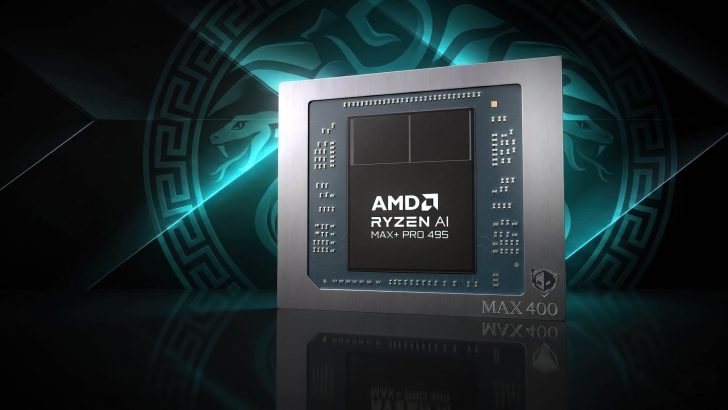


Lemonade 11.9, the latest release of the open-source local AI server, introduces experimental support for AMD’s ROCm HRX backend, specifically for Llama.cpp. This update is significant for several reasons, particularly for users interested in leveraging AMD’s hardware for AI tasks.
HRX is part of AMD’s ROCm compute ecosystem, designed to optimize performance across AMD GPUs, NPUs, and CPUs. It’s a new development in the ROCm landscape, part of their Loom/Hyperloom efforts, and aims to provide a more efficient alternative to the long-used LLVM IR. The hrx-system GitHub repository describes it as a collection of minimal runtime components providing an alternative implementation of HIP, which is currently part of ROCm.
One of the standout features of HRX is its potential to offer a 30-50% token per second (tok/s) uplift on prefill tasks compared to the existing Vulkan and HIP backends in Llama.cpp. For non-MTP decode tasks, it promises a 10% token per second uplift. This makes HRX particularly appealing for users looking to maximize the performance of their AMD hardware for AI workloads.
Lemonade 11.9 supports HRX on AMD’s Radeon RX 7900 series RDNA3 and Strix Halo APUs. This initial support is experimental and currently available for Linux users with GFX1100 and GFX1151 GPU targets. The hope is that GPU support will expand quickly, making HRX more accessible to a broader range of users.
In addition to HRX support, Lemonade 11.9 also brings Qwen3-Next support to its pinned Llama.cpp backend, along with other improvements. This makes it a compelling update for anyone using AMD hardware for local AI tasks.
For those shopping for a mini PC to run local AI tasks, this update is worth considering. If you already have an AMD GPU, such as the Radeon RX 7900 series, you might see significant performance improvements with this update. However, keep in mind that this is still an experimental feature, so stability and compatibility issues might arise.
For more details, you can check out the original article on Phoronix here.