

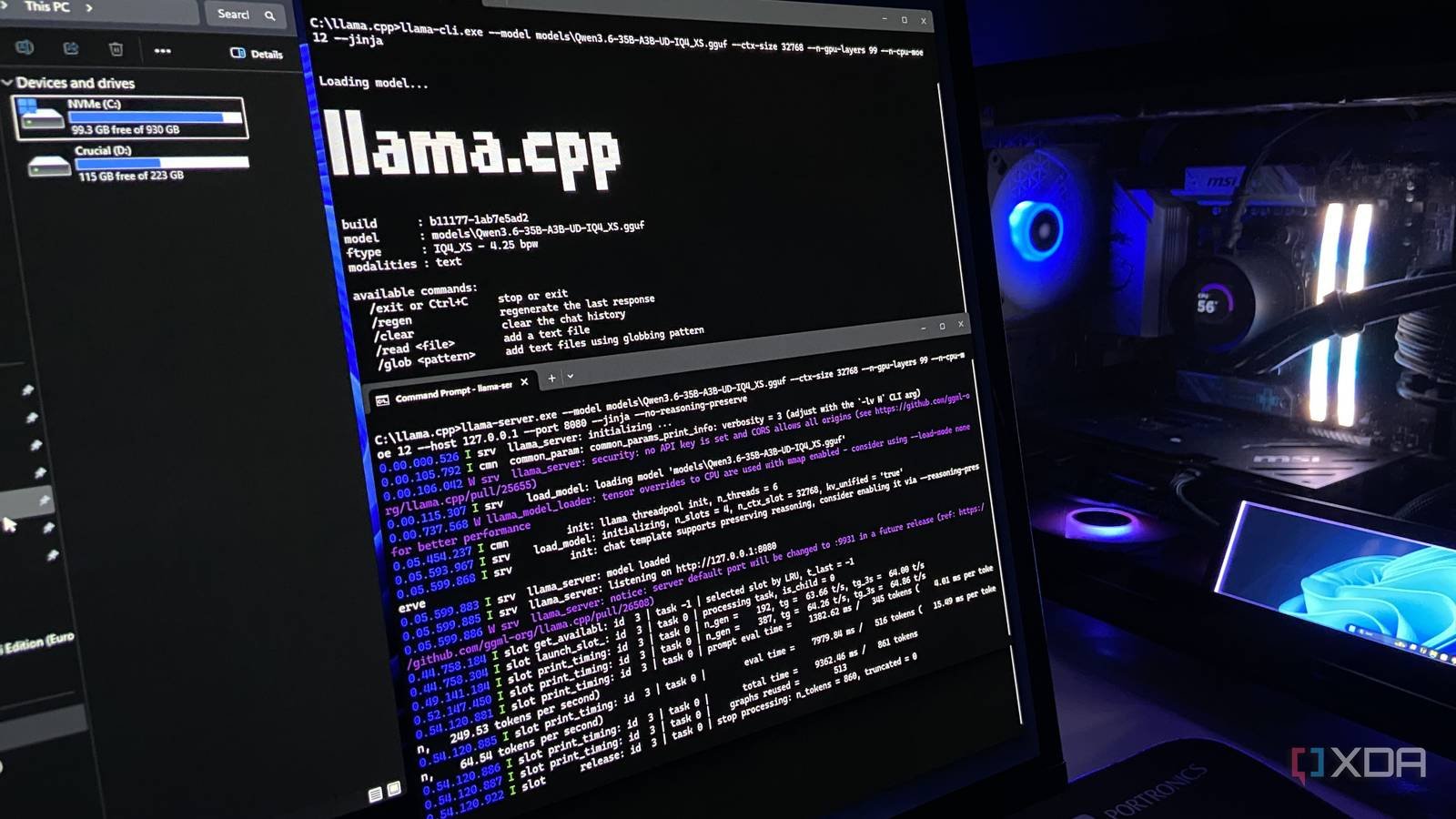
I recently tested a local large language model (LLM) to see if it could help free up space on my nearly-full 1TB SSD. The model I used was Qwen3.6-35B-A3B, running on my RTX 4070 Ti Super with 16GB of GDDR6X memory. This model has 35B total parameters and 3B active, and it was quantized using the UD-IQ4_XS method on llama.cpp.
The model had read-only access to a SQLite database exported from WizTree, which contained a full scan of my drive. It could perform four types of lookups: the largest files, folder sizes, the files inside a folder, and totals by file type. Each lookup was capped at 60 rows per call, and the model’s context window was limited to 32,768 tokens.
I gave the model a straightforward prompt: to audit the drive and report what could be safely deleted to free up space. The model was instructed not to propose user documents, photos, or personal files, and to avoid guessing when unsure. The results were mixed. The model identified about 17GB of data that could be safely deleted, with the majority coming from a 16GB rolling cache file used by Microsoft Flight Simulator. However, this file would be recreated upon launching the sim again.
Other useful findings included about 500MB of Microsoft Edge caches and 150MB of files in the Temp folder. The model also suggested deleting the llama.cpp toolkit folder, which was a duplicate installation in my case. However, it missed some obvious candidates for deletion, such as the Recycle bin contents (21GB), a 7.4GB crash report, and a 6.5GB shader cache folder.
The limitations of this setup are clear. The model file itself is 16.5GB, and with only 16GB of VRAM, some of it had to run from system RAM. This likely affected performance and context management. Additionally, the model’s lack of web search or code execution capabilities limited its ability to verify the safety of deletions.
Despite these issues, the experiment showed promise. With further refinement and more powerful hardware, local LLMs could become valuable tools for drive management. For now, though, manual verification of the model’s suggestions is necessary.
You can read the full details of the experiment here.